"AI customer service software" encompasses two very different purchases, and most guides blur the two together. One purchase is a helpdesk platform, the system your agents work in all day. The other is an AI layer you add to the helpdesk you already run.
So this guide is built around that split. We group the twelve tools by the decision in front of you, then by who each one fits: B2B SaaS teams with complex technical tickets, ecommerce and transactional support, or enterprise contact centers. Every entry has the same shape, including where the tool falls short, so you can compare like with like.
By the end, you will know whether you need a new platform or only a better AI layer and what AI customer service software is the best for you.
TL;DR: the 12 best AI customer service software tools in 2026
The right tool depends first on your team, and only then on a feature checklist.
-
If you run B2B SaaS support with complex, technical tickets, the native AI in your helpdesk often forces you to rely on a help center that goes stale faster than your product ships. A dedicated AI layer that learns from your resolved tickets fits better. Look at Pluno, Decagon, or Fin.
-
If you run ecommerce or high-volume transactional support ("where is my order," returns, refunds), a tool wired into your store handles most of it. Look at Gorgias, Tidio, or Intercom.
-
If you are choosing or replacing a whole helpdesk, the platform is the decision and its AI comes with it. Zendesk, Intercom, and Freshworks fit most teams; Salesforce and HubSpot fit teams whose CRM already lives there.
-
If you are a small team that wants simple, Help Scout and Tidio get you live in a day.
What is AI customer service software?
AI customer service software is any tool that uses AI to resolve customer queries, assist human agents, or analyze support conversations at scale. It spans autonomous resolution (an AI agent that answers and closes tickets on its own), agent assist (drafted replies and summaries for a human), automatic ticket tagging and routing, quality assurance, and analytics.
The category has moved well past the scripted chatbot. In 2026, the leading tools reason over live customer data and resolve multi-step issues without a human, while others focus on making agents faster. Some of these products are full helpdesk platforms with built-in AI. Others are AI agents and platforms that connect to the helpdesk you already run.
The two decisions hiding in "AI customer service software"
Before you compare a single tool, decide which of two purchases you are making, because they are not the same.
-
Decision one - You pick or replace your helpdesk platform, the system your agents live in, where tickets, channels, and workflows sit. You make this choice if you do not have a modern helpdesk yet, or you have outgrown one and want to consolidate. Zendesk, Intercom, Freshworks, Salesforce Service Cloud, and HubSpot Service Hub compete here, and each now ships its own AI. Changing platforms is a multi-quarter project that involves data migration and agent retraining, so it is by far the more difficult decision.
-
Decision two. You add an AI layer to the helpdesk you already run, keeping your platform and connecting a dedicated AI agent because the native AI underwhelms you. Adding a layer is faster to try, easier to reverse, and it does not disrupt the workflow your agents already know. Fin, Ada, Decagon, and Pluno play here.
Most teams already have a helpdesk they are not planning to rip out. For them, the real question is no longer "which platform." It becomes "the native AI or a dedicated AI layer." Framing it that way saves a lot of wasted vendor calls.
What to look for in AI customer service software
Judge the tools on how they will behave in your operations. There are seven things that matter most.
-
Integration with your helpdesk and CRM. The AI has to work inside the tools your agents already use. Anything that makes them switch tabs gets abandoned, whatever its underlying quality.
-
Where the AI gets its answers. Some tools rely mostly on help-center articles and written procedures. Others learn from your resolved support tickets and connected systems. The difference matters most in B2B SaaS, where the product changes faster than anyone updates the docs, so the help center never covers the edge cases that fill your queue.
-
Escalation quality. Test what happens when the AI gives up. A handoff that drops the conversation history and makes the customer repeat themselves is worse than no bot at all, and poor handoffs are among the most common failures in live deployments.
-
Control. You should be able to maintain and influence which topics the AI handles, which it routes to a human, and when to step in.
-
Channel coverage. Check that the tool is strong on the channels you use, whether that is email, chat, voice, or social. A tool that shines on chat and stumbles on email creates an uneven experience.
-
Security and compliance. SOC 2, a signed DPA, and a clear GDPR posture are a filter you apply before anything else. Support conversations carry personal data.
-
Pricing predictability. Per-seat, per-resolution, and credit-based models produce very different bills as you scale. Work out what a full month looks like at your volume before you commit.
Full-stack AI customer service software
Choose one from this list of you're just starting out or looking to switch your current helpdesk.
1. Zendesk
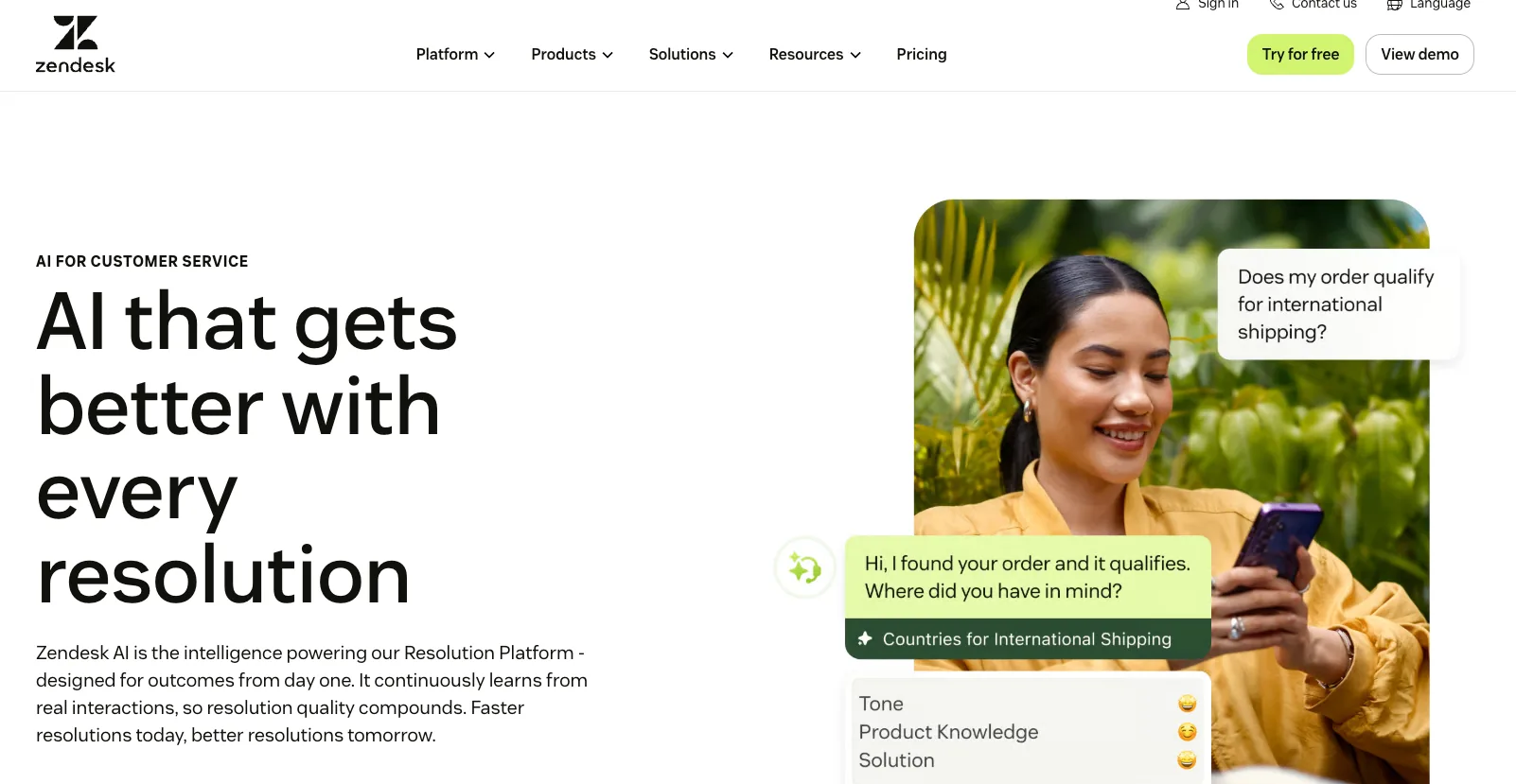
Zendesk is the mature, broad helpdesk that most teams already recognize, and it has pushed AI across the whole workflow. Its AI agents resolve common queries autonomously, Copilot drafts replies and summarizes for human agents, and its acquisition of Forethought in March 2026 added self-improving agents that generate and test new procedures over time.
Where it falls short. The costs stack. A Suite plan, the Copilot add-on, and per-resolution AI agents are three separate line items, and the total climbs quickly for a larger team. Zendesk is also broad by design, so it is less specialized than tools built for one type of support.
Best for teams that want capable AI inside a proven platform and do not want to manage a separate AI vendor.
Pricing. Support from $19 per agent per month; Suite Team $55, Suite Growth $89, Suite Professional $115 per agent per month billed annually. Copilot is a $ 50-per-agent-per-month add-on. AI agents now bill per resolution; Zendesk does not list this on its seat pricing page, and third-party analyses report roughly $1-$2 per resolution for mid-market teams. Confirm in a quote.
2. Intercom (now Fin)
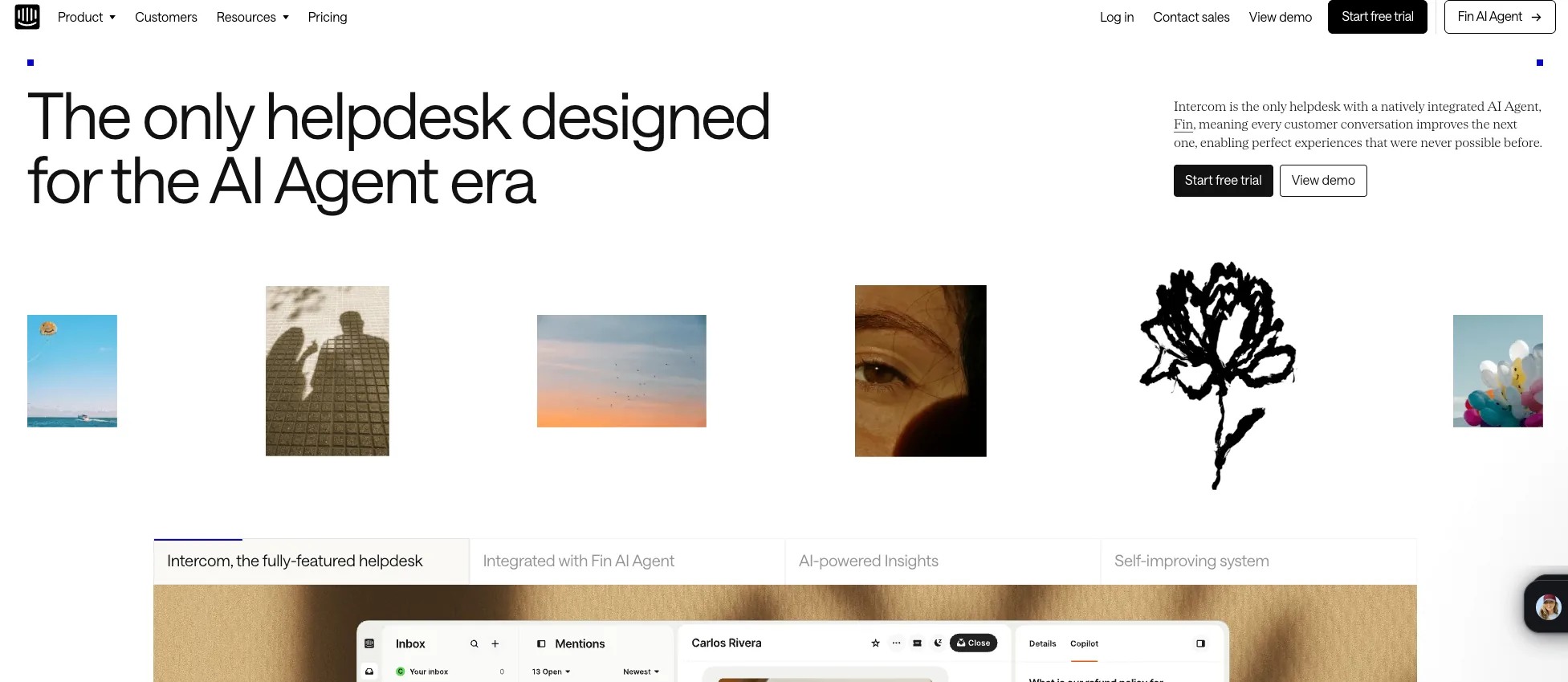
Intercom is the digital-first messaging helpdesk, strong on chat and built around its Fin AI agent. The company renamed itself Fin in May 2026, though the helpdesk and its per-seat plans still carry the Intercom name. It covers chat, email, WhatsApp, SMS, phone, and Slack.
Where it falls short. The bill is a moving target. Seats, $0.99 per Fin outcome, and usage-based channel fees compound as volume grows. The pending Salesforce acquisition, expected to close in early 2027, is also a continuity question for a multi-year commitment.
Best for SaaS and digital-native teams that want a tightly integrated, AI-first platform and can absorb usage-based billing.
Pricing. Seats from $29 per seat per month, billed annually. Fin AI Agent bills $0.99 per outcome, where an outcome is a resolution, a procedure handoff, or a disqualification.
3. Freshworks (Freshdesk)
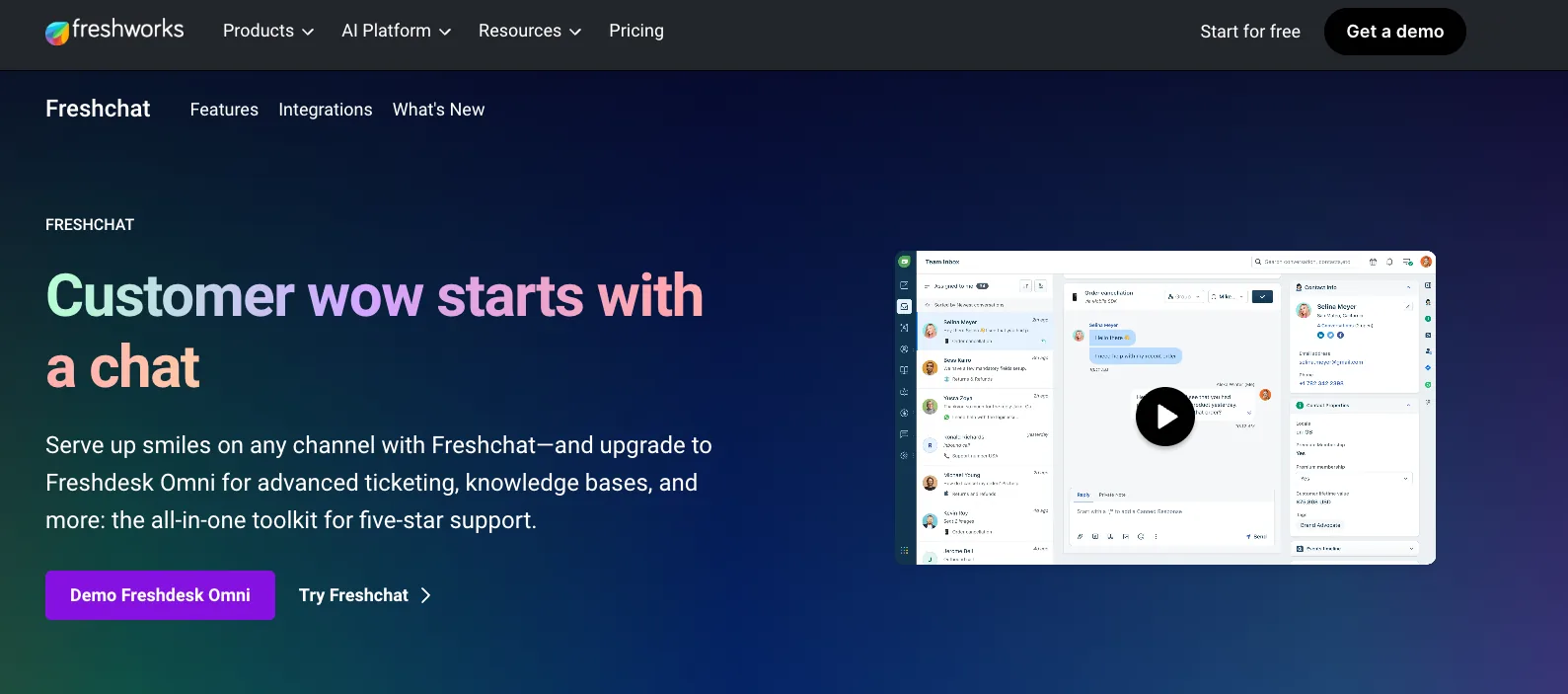
Freshworks runs Freshdesk, an accessible mid-market helpdesk, with Freddy as its AI layer for both agent assist and autonomous resolution. It is quick to adopt, covers the main channels, and has a friendly entry price.
Where it falls short. Freddy is metered per session, and unused sessions expire each cycle with no rollover, so busy months and quiet months are billed very differently. Getting a full workflow live can mean stacking several add-ons.
Best for mid-market teams that want enterprise-grade AI features without a heavy implementation.
Pricing. Freshdesk Omni from $29 per agent per month, billed annually. Freddy AI Agent runs $49 per 100 sessions for email and about $100 per 1,000 sessions for web chat, with the first 500 sessions included once per account.
4. Salesforce Service Cloud (Agentforce)
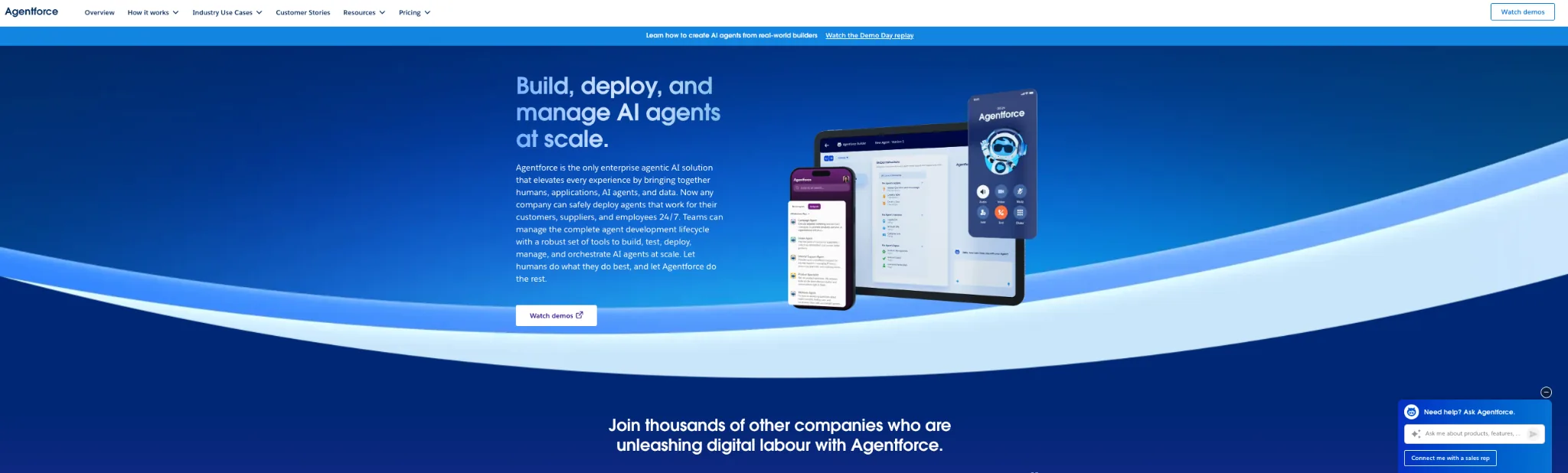
Salesforce Service Cloud extends the Salesforce CRM into support, and Agentforce is its AI agent layer. If your company already runs on Salesforce, agents can act across your CRM data, which is its core strength.
Where it falls short. Layered pricing and deployment complexity make it slow and expensive to stand up, and it is overkill for a small support team that does not already live in Salesforce.
Best for enterprises already standardized on Salesforce that want support inside the same system.
Pricing. Service Cloud runs per user per month billed annually: Starter $25, Pro $100, Enterprise $165, Unlimited $330, and Einstein 1 Service $500. Agentforce is about $2 per conversation on one model, or consumption-based Flex Credits at $500 per 100,000 credits (roughly $0.10 per action). Confirm the model that fits your use case.
5. HubSpot Service Hub
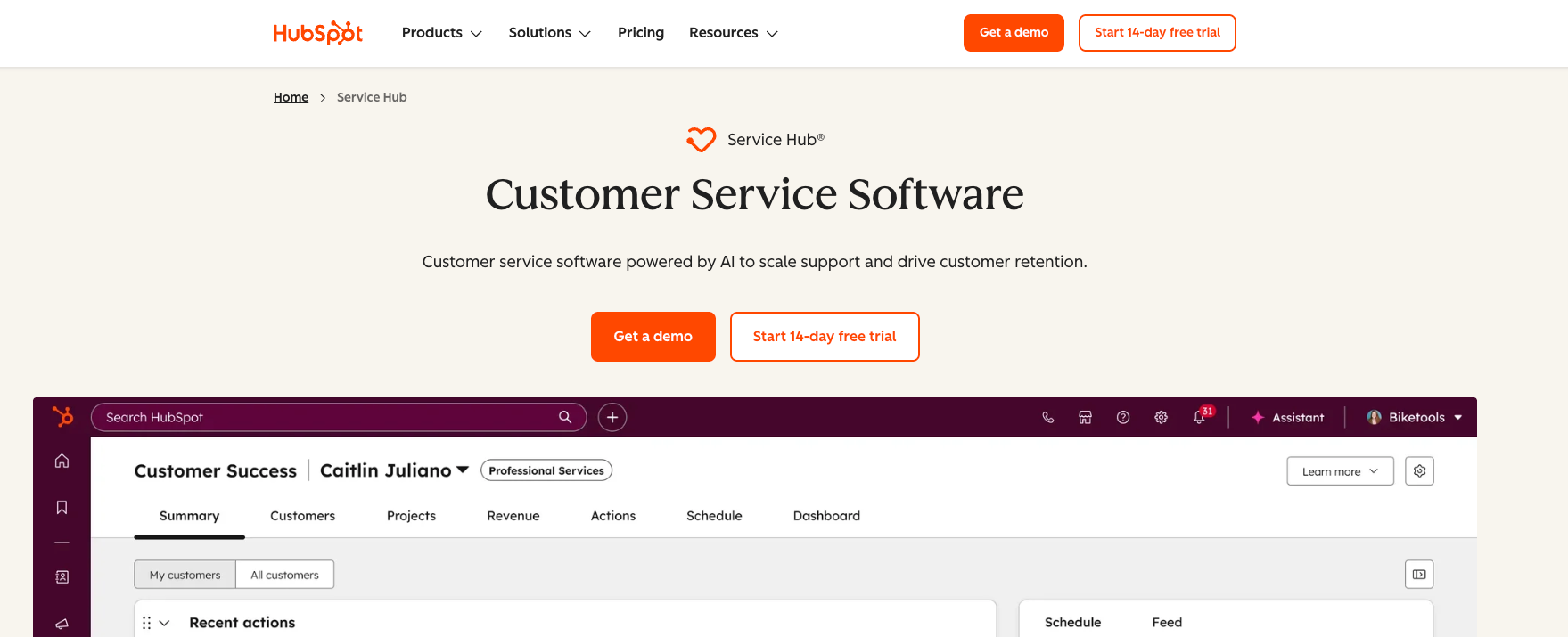
HubSpot Service Hub is the support product native to HubSpot's CRM, with Breeze as its AI layer. If your marketing, sales, and CRM already run on HubSpot, keeping support there keeps the whole customer lifecycle in one system, and there is a free tier to start.
Where it falls short. Breeze is still maturing against the specialists, and its per-resolution AI sits behind the $90-plus plans plus onboarding fees. Teams that need deep, support-specific AI may find it thinner than a dedicated tool.
Best for teams whose CRM and marketing already live in HubSpot and who value one joined-up system.
Pricing. Free tier; Starter about $9 to $15 per seat per month; Professional $90 per seat per month (plus a $1,500 onboarding fee); Enterprise $150 per seat per month with a 10-seat minimum. Breeze Customer Agent bills $0.50 per resolved conversation on a $90-plus plan.
Autonomous AI customer service agents and layers
Add the one below to your existing helpdesk for maximum performance.
6. Fin (the AI agent, deployable on other helpdesks)
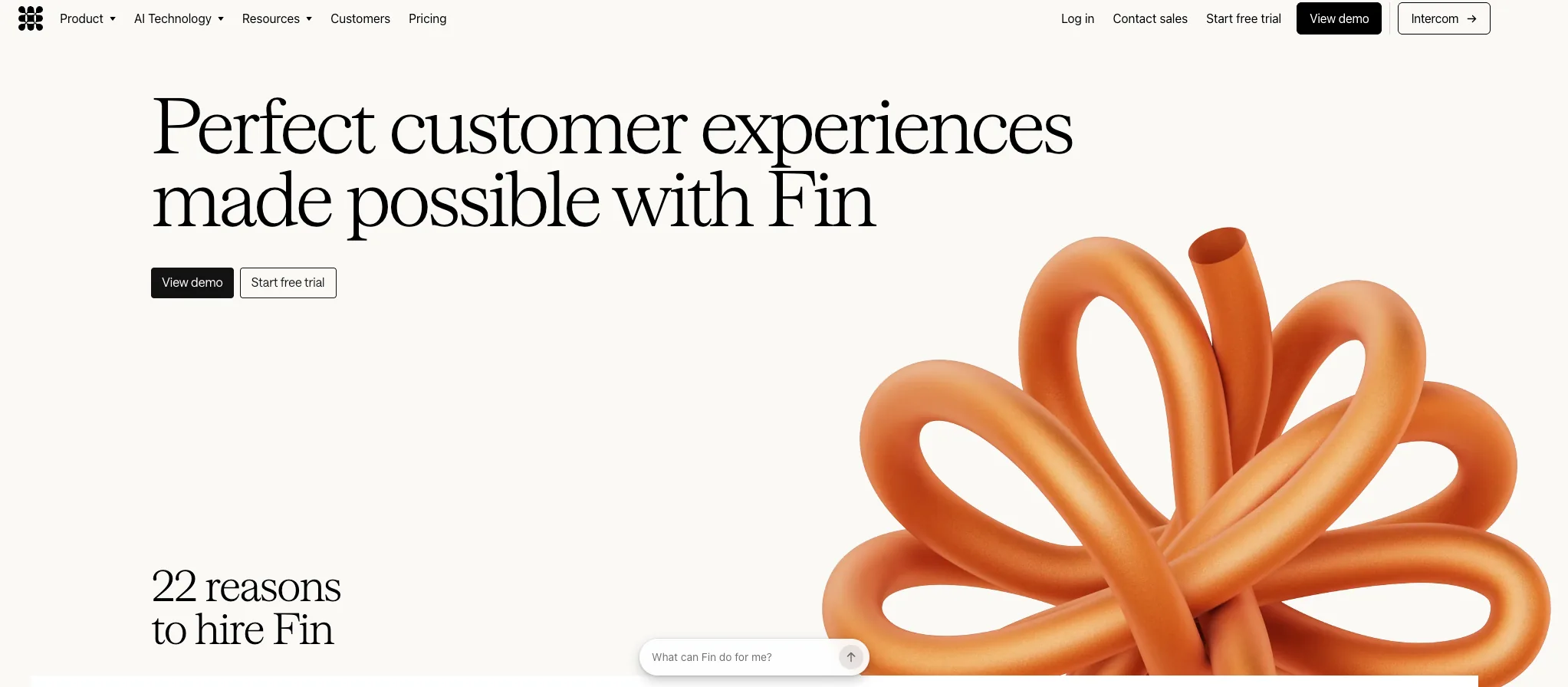
Fin is the same company as Intercom after the May 2026 rename, and it earns a second entry because its agent does not only run inside Intercom. You can deploy Fin as a layer on top of another helpdesk, including Zendesk, which makes it a viable option for teams that want a proven agent without changing platforms.
Where it falls short. The per-outcome cost adds up at scale, and Fin's best economics come when you also run its own helpdesk. Its wedges, Procedures and Custom Actions, are powerful but manually configured and maintained, which becomes ongoing work for teams with many edge cases.
Best for teams that want a widely adopted agent live quickly and can work with usage-based billing.
Pricing. $0.99 per outcome, with a monthly minimum on an existing helpdesk. Confirm in a quote.
7. Ada
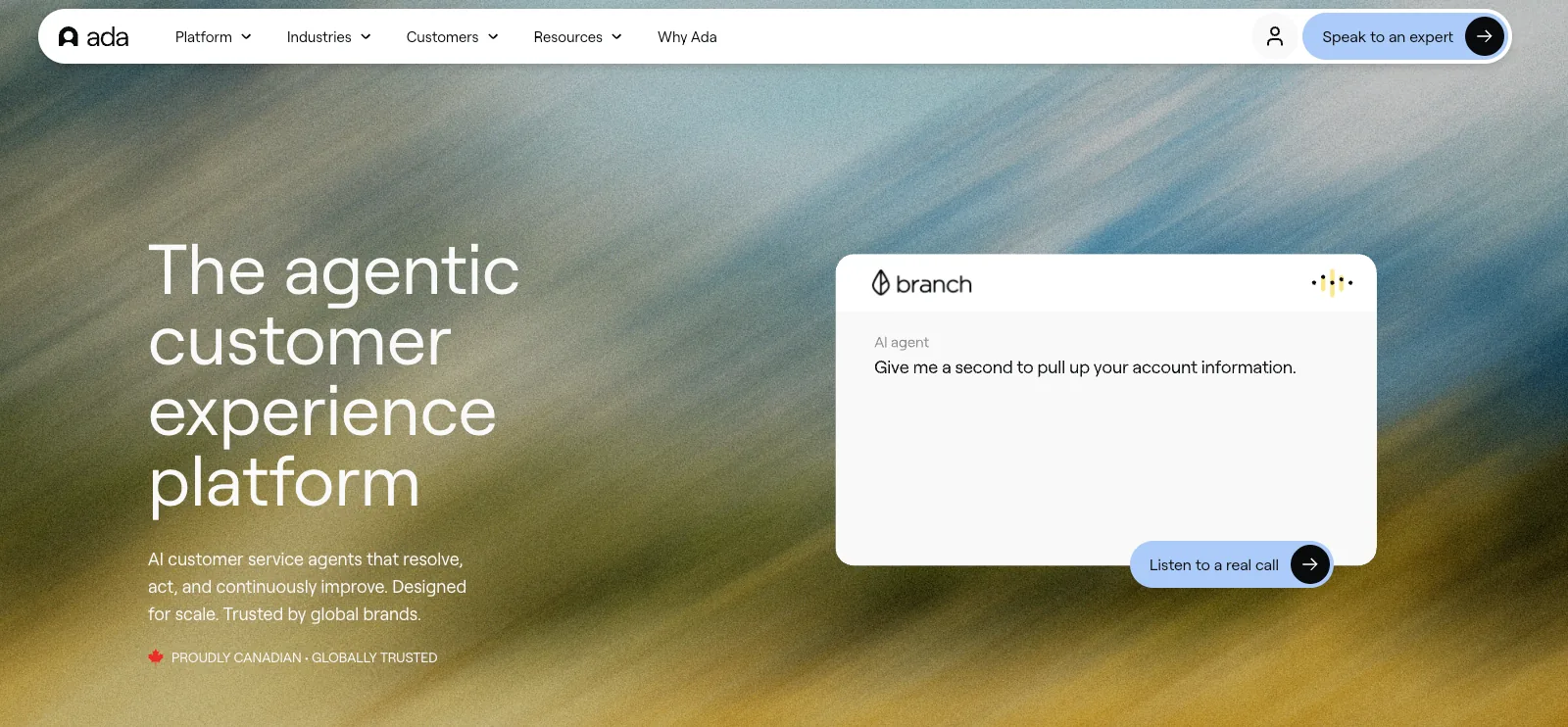
Ada is a no-code automation agent aimed at large deployments across chat, messaging, and voice. It is mature, spans many industries, and lets operations teams build and adjust agent behavior without engineering.
Where it falls short. Pricing is unpublished and sales-led, and it leans toward deflection built on procedures, playbooks, and APIs more than on learning from your resolved technical tickets. Continuity between bot and human takes configuration.
Best for large, multi-sector teams that want a no-code agent with a long track record.
Pricing. Not published. Third-party estimates report from about $30,000 per year and roughly $1 to $3.50 per resolution, with enterprise deals reaching $100,000 to $300,000 per year. Treat these as estimates and get a quote.
8. Decagon
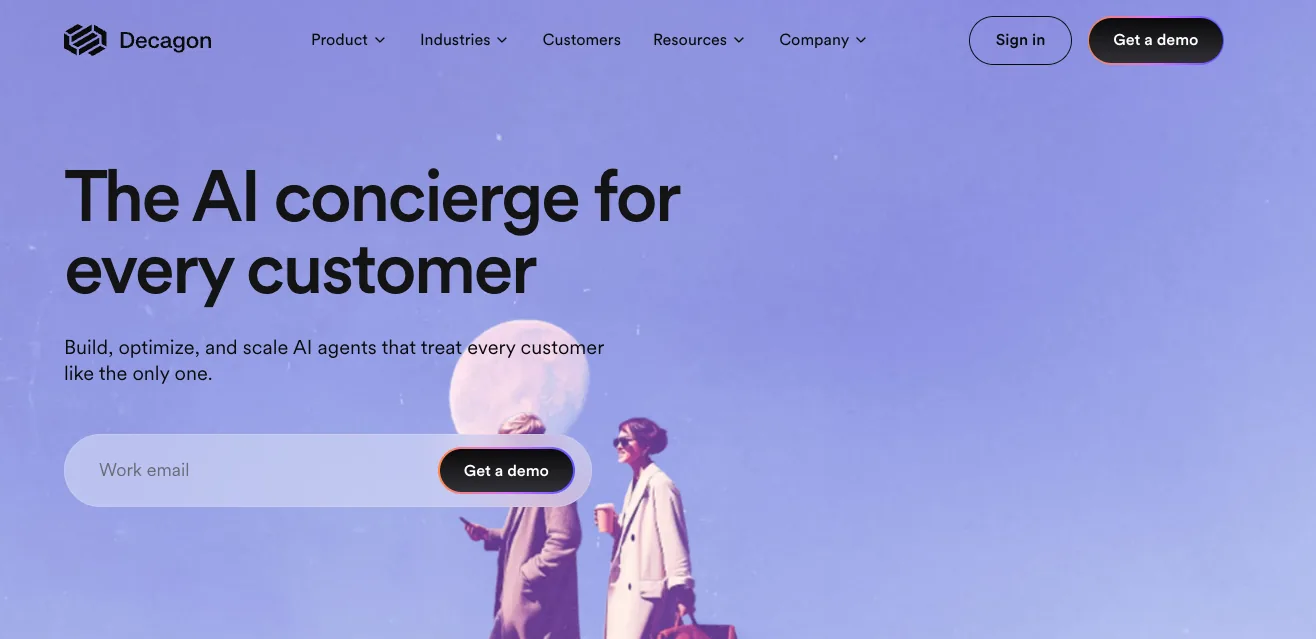
Decagon is an AI-native agent built for complex, multi-step support, trained on your knowledge base, documentation, and historical tickets, with a stated focus on resolution quality over raw deflection. It has a following among technology and SaaS companies and includes white-glove implementation.
Where it falls short. It is a six-figure, sales-led commitment, advanced configuration runs through Decagon's team instead of self-serve, and it has no native helpdesk, so you keep running Zendesk or Salesforce alongside it.
Best for well-funded enterprises with complex support and the budget for a hands-on rollout.
Pricing. Not published. Third-party roundups report a base around $50,000 per year with contracts ranging from about $105,000 to $923,000 per year. Treat these as estimates.
9. Pluno
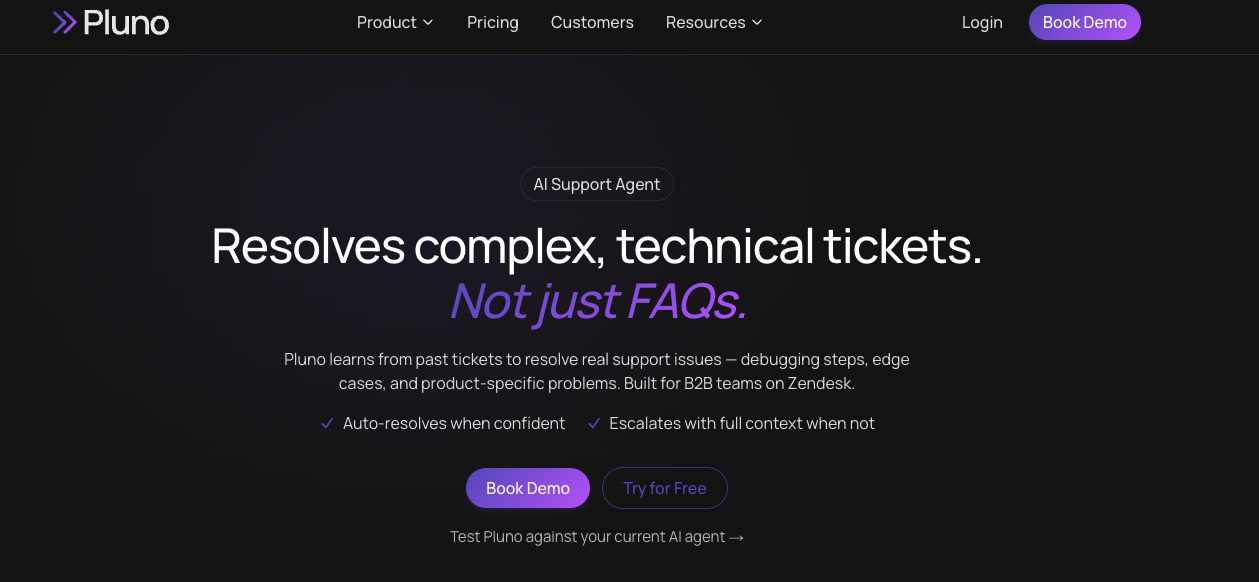
Pluno is an AI support agent for complex, technical tickets that works inside Zendesk and Intercom. It learns from your resolved support tickets, which lets it handle the edge cases your help center never documented: SSO failures, broken imports, and integration errors that fill a B2B SaaS queue where the product ships faster than the docs. Native AI usually leans on help center articles, so it either forces an answer or gives up. Pluno reads how your team resolved similar tickets before and answers from that.
It is a layer that works inside your helpdesk, so you keep your platform and switch on the modules you need:
-
Deflection AI resolves tickets autonomously across email, web chat, and social, and you pay only when it fully closes one. Escalations are never billed.
-
AI Copilot drafts a reply for every incoming message with its reasoning and sources shown, ready in the sidebar before the agent opens the ticket.
-
Escalation Copilot pushes a ticket to Slack or Jira in one click, with an auto-generated report and two-way sync back to the helpdesk.
-
Troubleshooting Agent investigates engineering-heavy tickets across code, logs, Sentry, session recordings, and databases, and it serves both support and engineering.
-
Quality Assurance scores every conversation instead of a 5% sample.
Where it falls short. Pluno is built for B2B SaaS teams already on Zendesk or Intercom. If you are not on a supported helpdesk, or you run high-volume consumer and transactional support, a platform-native or ecommerce-specific tool will likely be a better fit. And because its published resolution numbers reflect a complex ticket mix, the sensible move is to simulate it on your own tickets before you compare headline rates.
Best for B2B SaaS support teams on Zendesk or Intercom, roughly 500 tickets a month and up, with technical tickets that native AI often can't resolve.
Pricing. A flat platform fee based on your ticket volume, plus the modules you switch on: AI Copilot at €49 per agent per month, Deflection AI at €0.90 per resolution, Quality Assurance at €35 per agent per month, and the Troubleshooting Agent at €99 per month. Annual billing takes 15% off.
SMB and ecommerce-friendly tools
10. Tidio (Lyro)
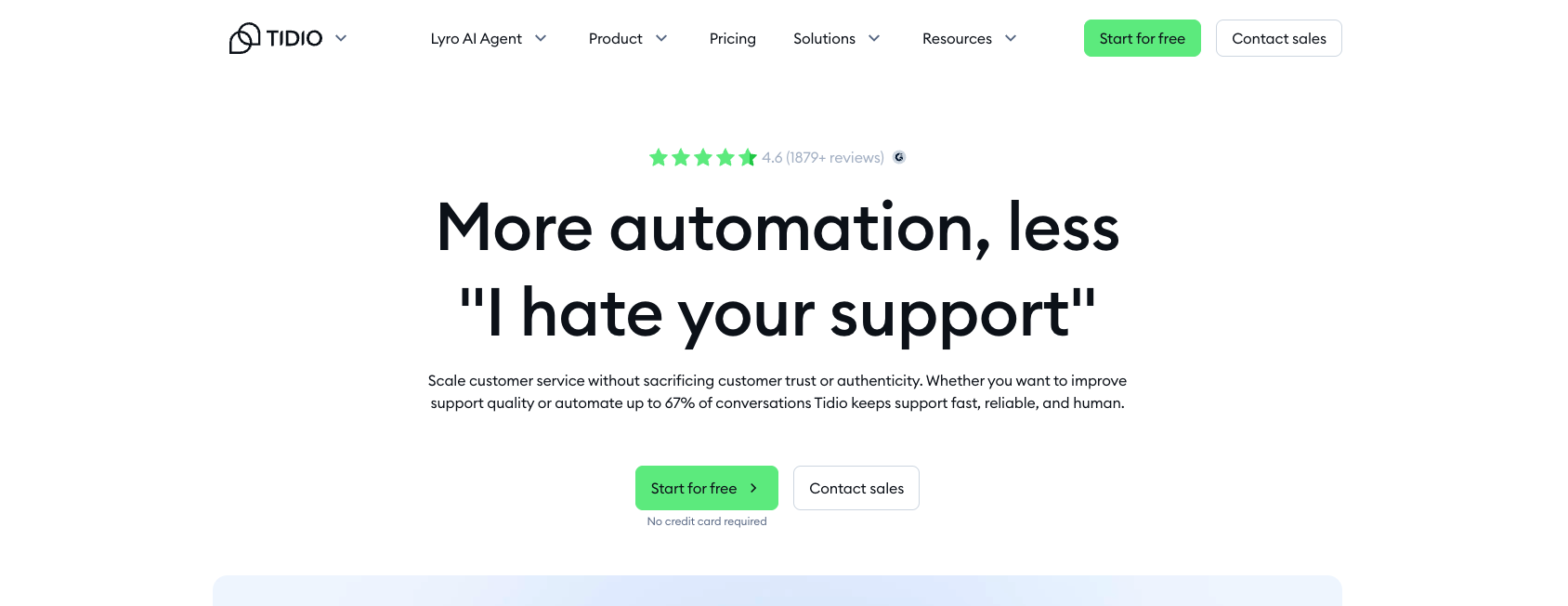
Tidio combines live chat, chatbots, and a help desk in one affordable product, with Lyro as its AI agent. It deploys in hours, integrates natively with Shopify and WordPress, and Lyro handles repetitive questions across chat and social. Tidio reports Lyro resolving around 67% to 70% of common questions, which is vendor-stated, across 48 languages.
Where it falls short. It is built for simpler queues, so it lacks the depth for complex or fast-scaling B2B support, and the real monthly bill climbs once conversation volume and seats are added in.
Best for small businesses and SMB ecommerce brands under about 500 tickets a month.
Pricing. From $29 per month; Lyro from $32.50 per month for 50 conversations, scaling up to $749 on higher tiers.
11. Gorgias
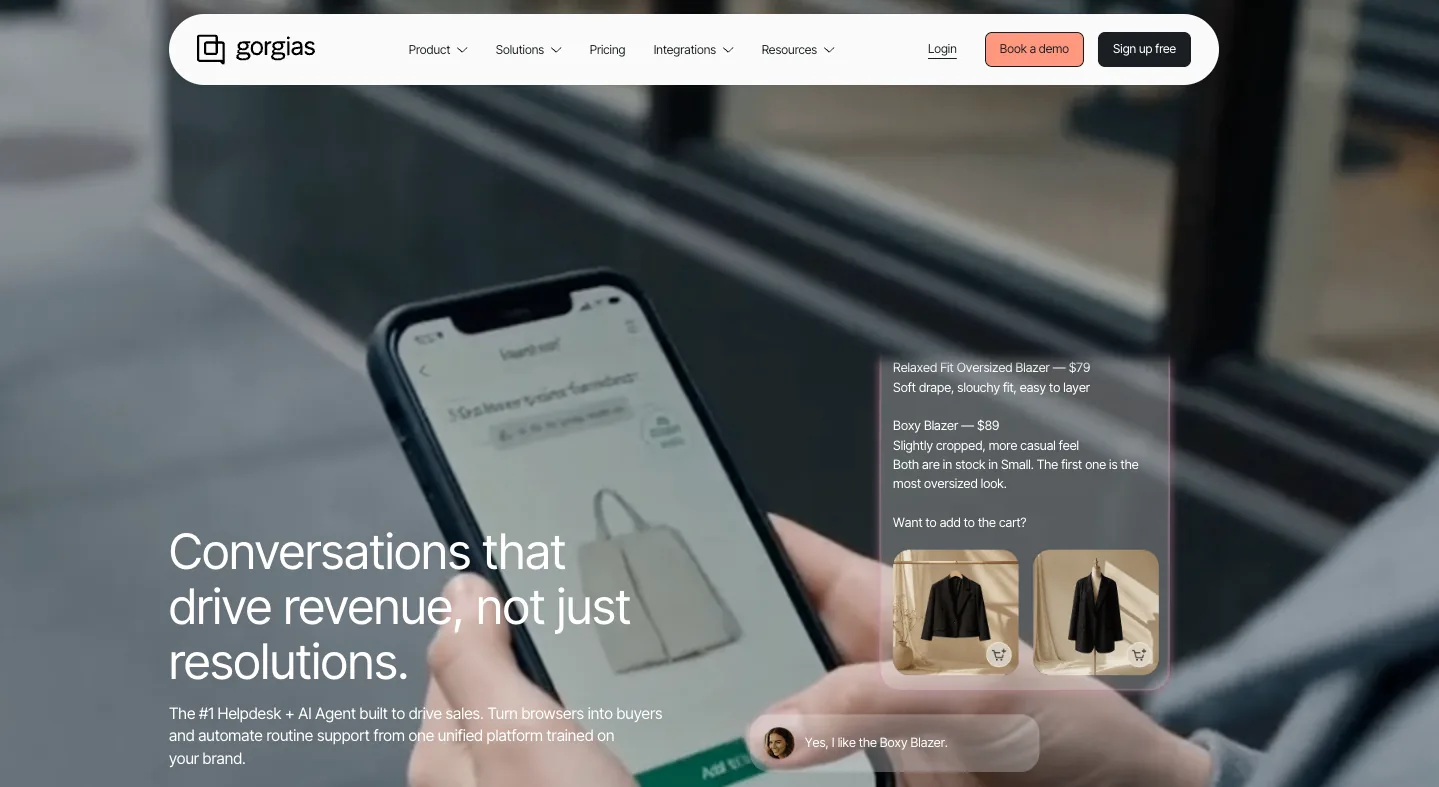
Gorgias is built for ecommerce, with deep Shopify integration and an AI Agent on every plan. It handles the order, tracking, and returns queries that dominate a store's inbox, and it can take actions in the store to resolve them.
Where it falls short. It is aimed at ecommerce, so B2B SaaS technical support sits outside its focus, and its AI-ticket billing has quirks worth reading closely before you scale.
Best for Shopify and ecommerce brands with high transactional volume.
Pricing. Plans from $10 per month (Starter) up to $900 per month (Advanced), plus Enterprise. The AI Agent bills $0.90 per resolved conversation, with overage from about $0.36 to $0.40 per ticket.
12. Help Scout
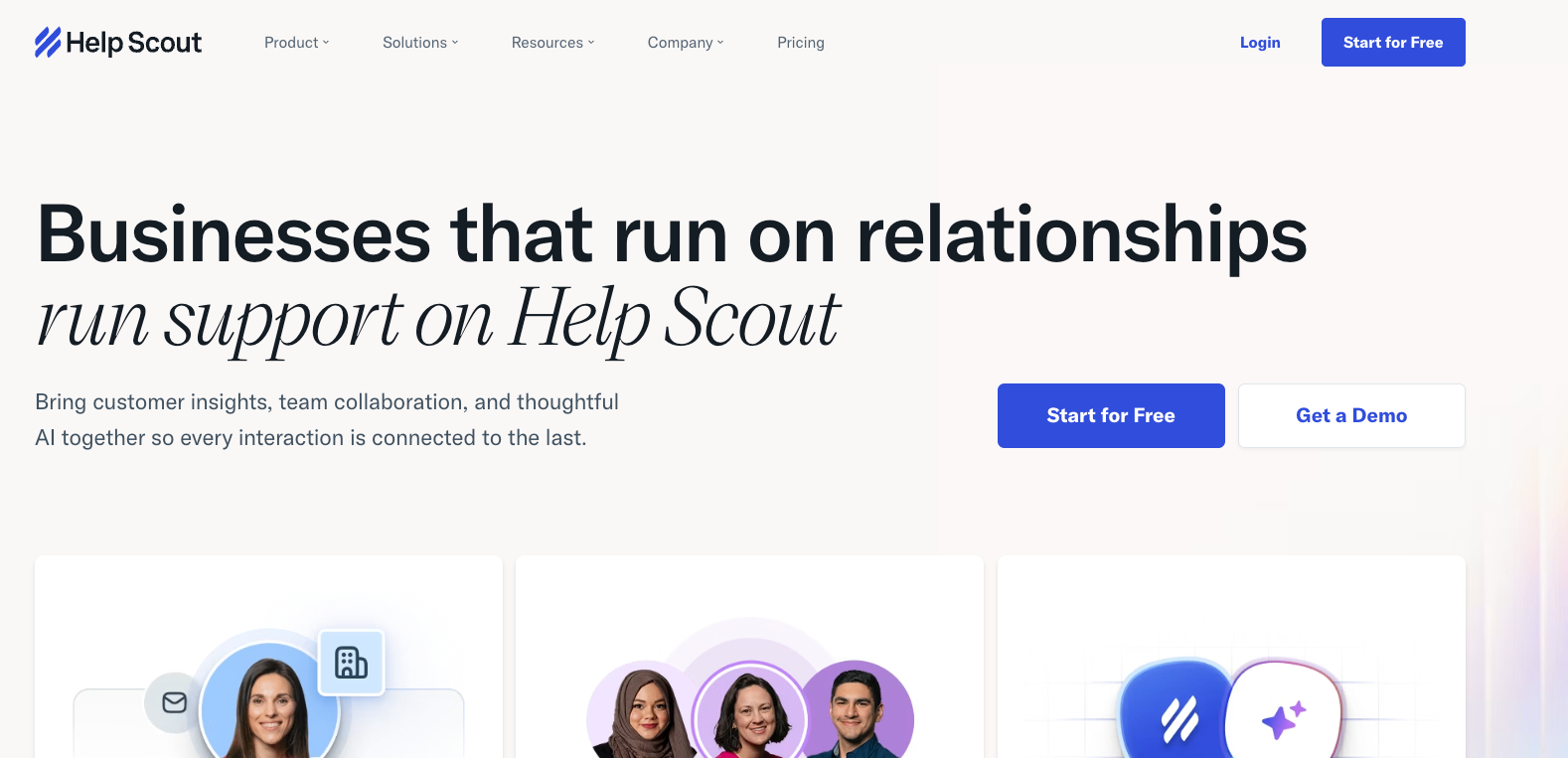
Help Scout is a simple, human-first shared inbox with AI drafts and a chatbot included on every plan, even the free tier. It is easy to adopt and pleasant to use, which is the whole point.
Where it falls short. It is built for simplicity, so teams scaling complex, multi-channel AI workflows will run into limits.
Best for small teams that want capable support without operational weight.
Pricing. A free tier for low contact volume; paid plans from about $50 per month with unlimited users. Confirm current pricing on Help Scout's site.
AI customer service software compared side-by-side
The table below is the fast version. Read the entries above for the detail, and treat "type" as the decision each tool belongs to.
| Tool | Type | Best for | Channels | Pricing model |
|---|---|---|---|---|
| Zendesk | AI customer service platform | Broad AI inside a proven helpdesk | Email, chat, voice, social | Per seat + Copilot add-on + per-resolution AI |
| Intercom (Fin) | AI customer service platform | SaaS, digital-first support | Chat, email, WhatsApp, SMS, phone, Slack | Per seat + $0.99 per outcome |
| Freshworks | AI customer service platform | Mid-market, quick adoption | Email, chat, social, voice | Per seat + per-session AI |
| Salesforce Service Cloud | AI customer service platform | Enterprises on Salesforce | Omnichannel via CRM | Per user + Agentforce per-conversation or credits |
| HubSpot Service Hub | AI customer service platform | Teams already on HubSpot | Email, chat, self-service | Per seat + $0.50 per resolved conversation |
| Fin | AI customer service agent | Proven agent on your helpdesk | Chat, email, social, voice | $0.99 per outcome |
| Ada | AI customer service agent | Large no-code deployments | Chat, messaging, voice | Sales-led, per-resolution (est.) |
| Decagon | AI customer service agent | Complex enterprise support | Chat, email, voice | Sales-led, six-figure (est.) |
| Pluno | AI customer service agent | B2B SaaS, complex tickets on Zendesk/Intercom | Email, web chat, social | Volume-based platform fee + €0.90 per resolution |
| Tidio (Lyro) | AI customer service platform for SMB/ecommerce | Small teams, SMB ecommerce | Chat, email, social | From $29/mo + Lyro conversation tiers |
| Gorgias | AI customer service platform for SMB/ecommerce | Shopify and ecommerce | Chat, email, social | Plan + $0.90 per resolved conversation |
| Help Scout | AI customer service platform for SMB/ecommerce | Simple small-team support | Email, chat | Free tier; from ~$50/mo |
Two pricing notes for the whole table. Vendor resolution rates are not directly comparable, because each tool defines a resolution or outcome differently. And every figure moves with region, billing term, usage, and plan packaging, so use these as a starting point and confirm in a quote.
How to choose the right AI customer service software for your team
The decision comes down to your buyer type. Match yourself to one of these and start there.
If you do not have a modern helpdesk or you are consolidating, choose a full-stack platform. Zendesk, Intercom, or Freshworks fit most teams. Pick Salesforce or HubSpot if your CRM already lives there and you want support in the same system.
If you run B2B SaaS support with complex, technical tickets on Zendesk or Intercom and the native AI keeps forcing weak answers, add a dedicated AI layer. Choose Pluno when you want resolution grounded in your own resolved tickets without replatforming. Choose Decagon when you have enterprise budget for a white-glove rollout. Choose Fin or Ada when you want a large, proven deployment and can work with usage-based pricing.
If you are an SMB or ecommerce brand with mostly transactional queries, choose a tool wired into your store. Gorgias fits Shopify, Tidio fits small ecommerce teams, and Help Scout fits any small team that values simplicity.
Whatever your shortlist, run a proof of concept on your own tickets before you sign. Feed each tool a few hundred of your hardest historical tickets and see what it resolves. Headline resolution rates do not carry across customer bases, and the tool that wins on your queue is the one to buy.
FAQ
What is the best AI customer service software? There is no single best tool, because the right pick depends on whether you are choosing a platform or adding an AI layer, and on your buyer type. For a full platform, Zendesk and Intercom lead for most teams. For a complex B2B SaaS queue on an existing helpdesk, a dedicated layer like Pluno or Decagon fits better. For ecommerce, Gorgias or Tidio.
How much does AI customer service software cost? It ranges from free tiers to six-figure enterprise contracts. Platforms run roughly $19 to $150 per seat per month, and AI usually adds a per-resolution or per-conversation charge, commonly $0.50 to $2. Enterprise agents like Ada and Decagon are sales-led and can reach $100,000 or more per year. Model your real volume before you commit.
What is the difference between an AI chatbot and AI customer service software? A chatbot answers common questions on a channel and hands off the rest. AI customer service software is the wider system: autonomous resolution, agent assist, tagging, routing, quality assurance, and analytics. Most teams asking for a chatbot want the full software.
Do large companies use AI for customer service? Yes, widely. Enterprises use AI to resolve routine tickets, assist agents, and analyze conversations at scale, and vendors like Zendesk now expect AI to handle more service interactions than humans. Most still keep humans in the loop for complex and sensitive cases.
Can I add AI to my existing helpdesk without switching platforms? Yes. Dedicated AI layers connect to the helpdesk you already run, so you keep your platform and workflow. Fin, Ada, and Decagon work this way, and Pluno is built for B2B SaaS teams on Zendesk and Intercom that want resolution grounded in their resolved tickets.
How do I measure whether an AI customer service tool works? Run a proof of concept on your own historical tickets, especially your hardest ones, and check what it resolves on your own cases instead of trusting a demo number. Watch escalation quality too, since a clean handoff with full context matters as much as the resolution rate.