Agentforce demos well. Then the scoping call starts, and the list grows: Data 360, the right edition, Topics, Actions, a partner, and a meter that charges for activity rather than fixes.
If that's where you are, you're probably weighing Agentforce alternatives, and you don't have to leave Service Cloud to switch. I put Agentforce next to Pluno, the alternative I'd pick for B2B SaaS support, and tested both against six problems every support team runs into:
- Getting live: what you need and how long it takes
- Finding answers: where each one looks before it replies
- Technical cases: multi-step problems with no article behind them
- Uncertain answers: what a rep receives when the AI hands over
- Bugs: getting engineering involved without losing the thread
- The bill: what you're charged for, and when
Pluno wins all six, and Agentforce keeps one clear edge outside them: voice. If you'd rather scan a wider list first, I cover six more alternatives to Salesforce Agentforce further down. My roundup of the best Salesforce AI agents goes deeper on each.
TL;DR: Which Agentforce alternative fits your support team?
Pick Pluno if:
- Your fixes live outside your help center. Pluno learns from closed cases and the tools your engineering team works in, like Slack or Jira, and averages a 65% resolution rate.
- You want to be live in a day or two. There's no Data 360, Agentforce license, or Topic design to finish first.
- You want to pay for fixes. It's €0.90 per resolved case and €49 per seat for agent assist, on top of a platform fee from €249 a month.
Pick Agentforce if:
- Phone is a main channel. Agentforce Voice runs inside Salesforce, and Pluno doesn't do voice.
- Salesforce runs everything. You're on Advanced or Max and have admins to build and maintain the agent.
- Your help center articles already answer most cases.
Agentforce vs Pluno: two different ideas of an AI agent
Unlike most Agentforce alternatives, Pluno works inside Service Cloud the way Agentforce does. Both reply on cases and in Enhanced Chat, and both keep Salesforce as the system of record. The difference is how they get good at your support.
Agentforce is a platform. Your team decides what it does by writing Topics and instructions and building Actions in Flows, Apex, or Prompt Builder. It knows what's in your help center articles, your records, and the data you bring into Data 360.
Pluno is an agent that arrives built for support. Like Agentforce, it works with what's already inside your Salesforce: your help center articles, your cases, and your records.
On top of that, it searches the places your engineering and product teams work, such as Slack or Jira, along with your docs and APIs.
It also doesn't wait for you to write the rules. Pluno learns them by observing your best past conversations between your top support reps and your customers. When a specific type of case needs extra care, you can add a rule on demand.
Agentforce vs Pluno on 6 support problems
These are the six questions I'd put to any of the Agentforce alternatives on your list. Here's how Agentforce and Pluno answer each one.
1. Getting live: Pluno wins
Pluno connects in hours to a day or two. An Agentforce implementation is a project of its own.
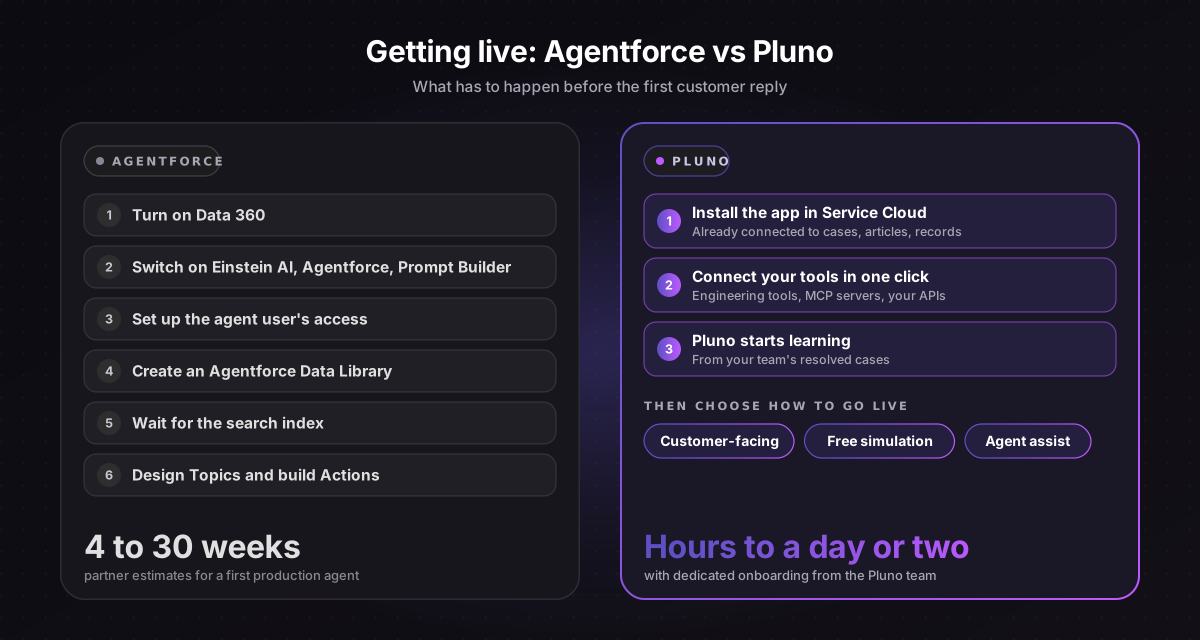
Before Agentforce answers a customer, Salesforce requires Data 360 to be provisioned and enabled. Data 360, formerly Data Cloud, is Salesforce's data platform. Agentforce uses it to store and search the content it answers from.
If you haven't been through it, "enabled" is a setup job for an admin. Salesforce's setup guide walks through these steps:
- Turn on Data 360 in your org and give your admin the Data Cloud Architect permission set.
- Switch on the AI features it depends on: Einstein generative AI, Agentforce, and Prompt Builder.
- Set up access for the agent's own user account, including the data space and read access to your help center articles.
- Create an Agentforce Data Library, which loads your articles or files into Data 360 and builds a search index.
- Wait for the index to show as Ready before the agent can answer from it.
That covers the basic version. For anything beyond articles and files, Salesforce says you need to implement Data 360, which means connecting your data sources and mapping them to its data model. These features also consume Data 360 credits.
You also need an edition or add-on that includes Agentforce, plus someone to design Topics and build Actions.
Partner estimates show the size of an Agentforce implementation. Clientell puts a first production agent at 16 to 30 weeks, with first-year services of $48,000 to $95,000 for a pilot and $150,000 to $325,000 for a mid-market rollout. It also budgets 0.25 to 2.5 admins to keep the agent running, depending on scale.
Not every partner is that cautious. Cloud Analogy quotes 4 to 5 weeks for a standard rollout, so treat both as sales estimates.
With Pluno, setup starts by installing the app inside Service Cloud. From there, it's already connected to everything in your Service Cloud: your cases, help center articles, and records.
Next, you add the other tools you need with one-click integrations. Pluno also connects to MCP servers and your own APIs. From that moment, it starts learning.
How quickly it talks to customers is up to you:
- Go customer-facing right away. Pluno starts replying on cases and in Enhanced Chat.
- Run a free simulation first. Pluno takes your last 50 cases and shows, offline, how it would have answered each one. No customer sees a reply.
- Start with agent assist. From day one, Pluno drafts replies inside Service Cloud for your reps to review and send. Nothing goes out on its own, and it stays useful later for the complex cases that reach a rep.
Every customer also gets dedicated onboarding with the Pluno team.
2. Finding answers: Pluno wins
Agentforce starts from help center articles. Pluno starts from the cases your team already solved.
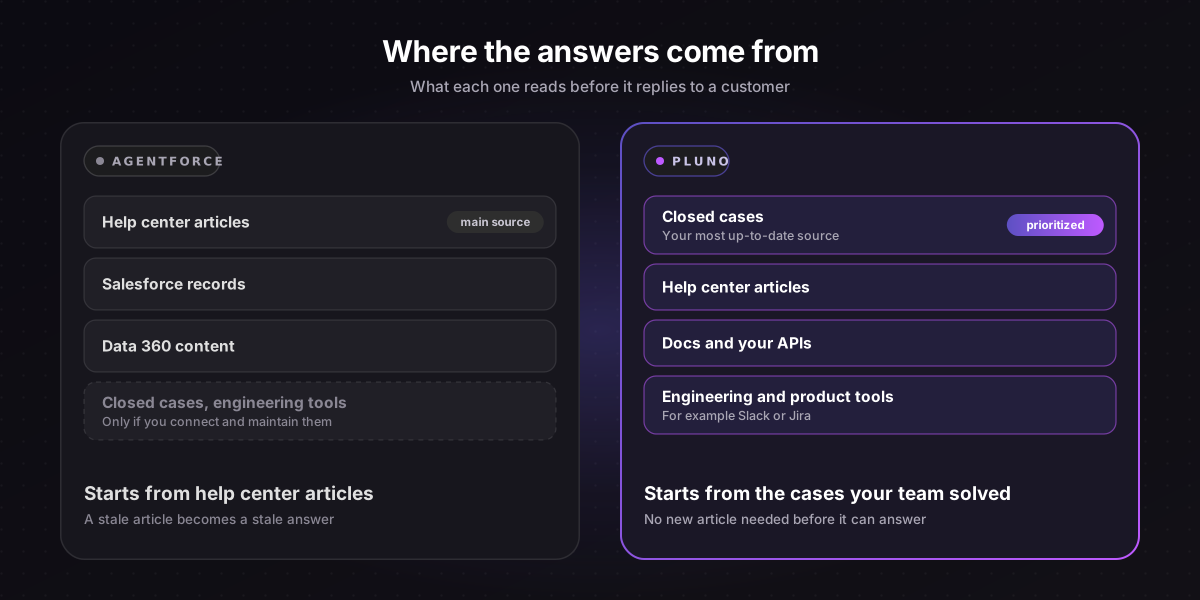
Agentforce grounds its replies in your help center articles (Salesforce Knowledge), your records, and content in Data 360. If an article is stale, the agent repeats it, which is why reviewers on G2 tie answer quality to how clean your data is. Reading closed cases, or the tools your engineering team works in, means connecting and maintaining those sources yourself.
Pluno prioritizes your resolved cases because they're your most up-to-date source. That's where your team shared the latest information with real customers. Nobody has to write a new article, or fix an outdated one, before Pluno can use it.
It picks up the troubleshooting steps and edge-case fixes your reps used, and favors the most recent successful ones. Then it checks your help center, your docs and APIs, and the tools where engineering and product discuss fixes, such as Slack threads or Jira issues, before it answers.
| Answer source | Agentforce | Pluno |
|---|---|---|
| Help center articles (Salesforce Knowledge) | Yes, its main source | Yes |
| Closed cases | Only if you prepare and connect them | Yes, prioritized as the most up-to-date source |
| Salesforce records | Native | Through the integration |
| Engineering and product tools (e.g. Slack, Jira, Confluence) | Through Actions or integrations you build | Built in |
| Your own APIs | Through Actions you build | Built in |
3. Technical cases: Pluno wins
Pluno looks up what it can and asks only what's missing, the way your senior reps do. Agentforce follows the branches you designed.
Say a customer writes, "Our Salesforce sync stopped after Tuesday's release." The right answer depends on their plan, the error code, and what changed that week.
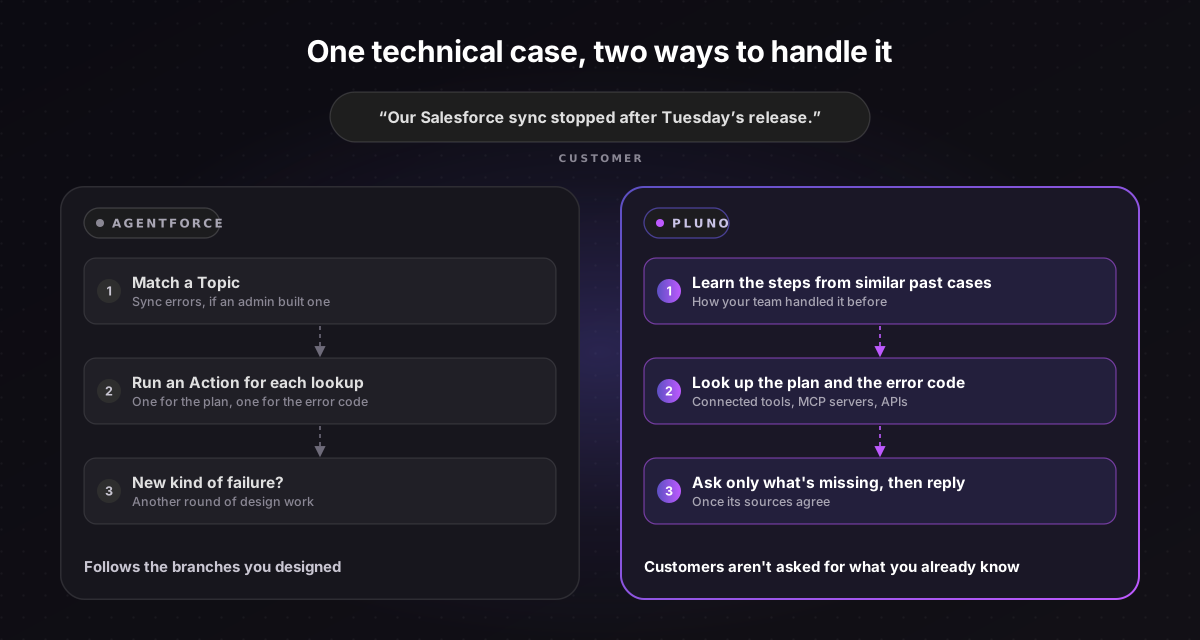
Agentforce can handle that if your admins built a Topic for sync errors and an Action for each lookup. Every new kind of failure means another round of design work.
Pluno learns the branching from how your team handled similar cases. Before it asks the customer anything, it pulls what it can from your connected tools, MCP servers, and APIs, such as their plan and the error code. Customers aren't asked for information you already have, and Pluno replies once its sources agree.
4. Uncertain answers: Pluno wins
Both hand off to a rep. Pluno sends a research brief, not just a transcript.
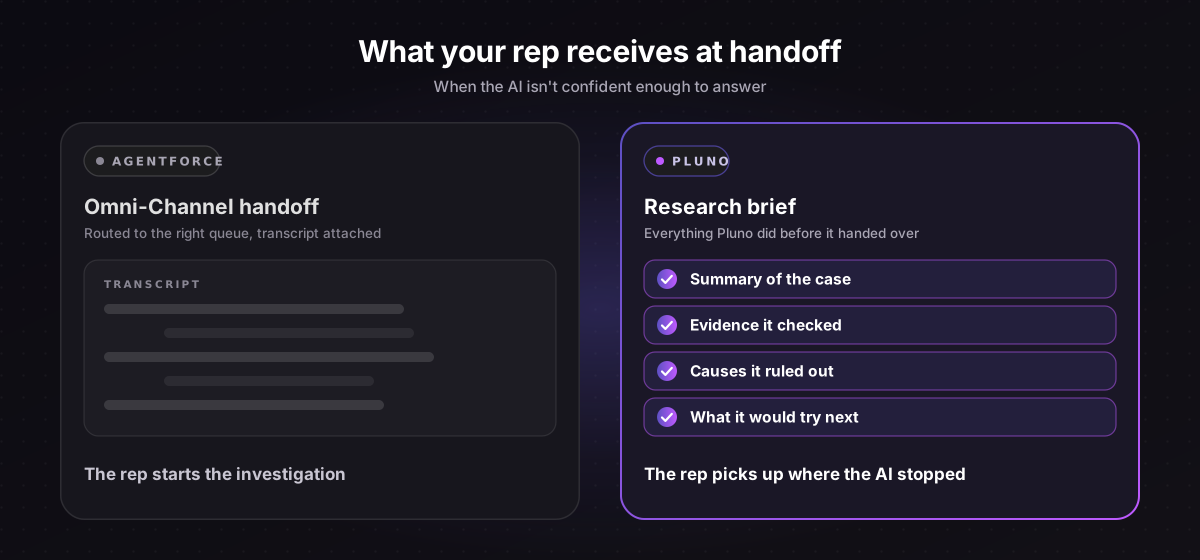
Agentforce routes the conversation through Omni-Channel to the right queue, with the transcript attached. That works, but the rep often starts the investigation from scratch.
When Pluno isn't confident, it passes the case on with a summary, the evidence it checked, what it already ruled out, and what it would try next. The rep picks up where the AI stopped.
5. Bugs: Pluno wins
Pluno ships with engineering escalation built in. With Agentforce, you build it.
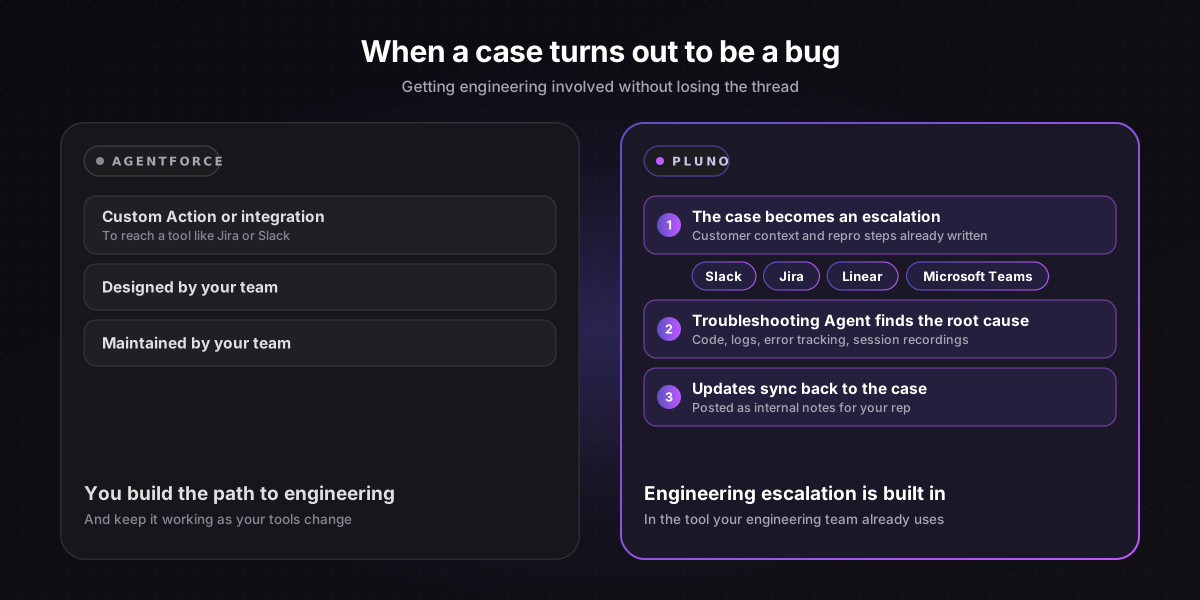
For technical products, the hardest part of a case often starts after support: the bug report, the investigation, and the update back to the customer.
- Escalation Copilot turns a case into an escalation in the tool your engineering team already uses, such as Slack, Jira, Linear, or Microsoft Teams, with the customer context and reproduction steps already written. Updates sync back to the case as internal notes.
- Troubleshooting Agent investigates code, logs, error tracking, and session recordings to find the root cause, then posts the fix where the investigation started.
Agentforce can reach tools like Jira or Slack through custom Actions or integrations. Your team designs and maintains them.
6. The bill: Pluno wins
Agentforce charges for activity, on top of a build project. Pluno charges for resolved cases and seats.
Agentforce pricing runs on two meters, and an org can't run both. Flex Credits cost $500 per 100,000, so a standard action costs about $0.10 and a voice action about $0.15. The alternative is $2 for every conversation.
On either meter, a conversation that ends in a handoff still costs money, and a long conversation costs more than a short one on Flex Credits. The exception is Salesforce's Help Agent, which bills $2 per resolution.
Pluno's pricing has three parts, and each one maps to something you get:
- A platform fee from €249 a month for under 500 tickets.
- Deflection AI at €0.90 per resolved case. You pay when the customer-facing agent fully resolves a case, and every resolved case is tagged so you can check the bill.
- AI Copilot at €49 per seat a month. This is agent assist. It researches each case through your connected tools and drafts the reply inside Salesforce for your rep to send.
It's a simpler model. You pay for resolved cases and for the reps who use the copilot, not for every action the AI takes along the way.
Here's what that looks like at 5,000 cases a month. To keep it fair, assume both tools resolve 65% of them, which is Pluno's average:
| Option | Monthly cost | What you're paying for |
|---|---|---|
| Agentforce, conversation meter | $10,000 | All 5,000 conversations at $2, resolved or not |
| Agentforce, Flex Credits | $5,000 | Every action in all 5,000 conversations (10 actions each at $0.10), resolved or not |
| Pluno | €4,424 | €1,499 platform fee, plus €0.90 for each of the 3,250 cases it resolves |
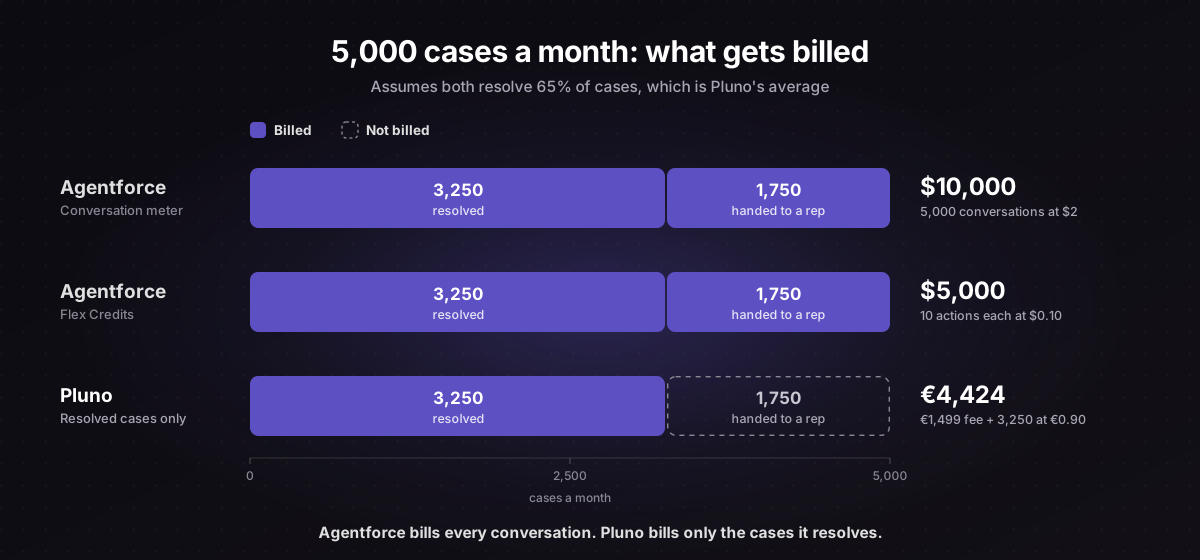
The difference is what the money buys. Agentforce bills all 5,000 conversations, including the 1,750 that still end up with a rep. Pluno's €0.90 applies only to the 3,250 cases it resolves.
Volume doesn't change the picture. Pluno costs about half of the conversation meter at every tier, because its platform fee scales with your case count. Against Flex Credits, usage alone lands close, and it comes down to how many actions your conversations take.
The meter isn't the whole Agentforce cost, though. The implementation estimates from the first section start at $48,000 in first-year services, which is $4,000 a month before a single conversation, plus Data 360 credits and admin time. Pluno has none of that, and its full tiers are on the pricing page.
Scorecard: Agentforce vs Pluno side by side
Here's how the two compare across all six problems, plus voice. You can use the same rows to score the other Agentforce alternatives on your shortlist.
| Problem | Agentforce | Pluno | Edge |
|---|---|---|---|
| Getting live | Data 360, edition or add-on, 4 to 30 weeks by partner estimate | Install in Service Cloud, connect tools in one click; live in hours to a day or two | Pluno |
| Finding answers | Help center articles, records, Data 360 | Closed cases first, then help center, docs, APIs, and engineering tools like Slack or Jira | Pluno |
| Technical cases | Branches your admins design | Looks up context in connected tools, asks only what's missing | Pluno |
| Uncertain answers | Omni-Channel handoff with transcript | Handoff with evidence, ruled-out causes, and next steps | Pluno |
| Bugs | Custom Actions or integrations | Escalation Copilot and Troubleshooting Agent built in | Pluno |
| The bill | $0.10 per action or $2 per conversation, plus implementation and Data 360 credits | Platform fee from €249/mo, €0.90 per resolved case, €49 per seat for agent assist | Pluno |
| Voice | Agentforce Voice | Call summaries from transcripts; no voice agent | Agentforce |
When Agentforce is still the right call
Agentforce is the better choice in three situations, and you should know them before you shortlist Agentforce alternatives.
- Phone carries a big share of your volume. Agentforce Voice runs on the same platform as your chat agent. Pluno doesn't answer calls, but it does summarize them: it turns each call transcript into a summary built from a template you customize.
- Your company is standardized on Salesforce. On the Advanced ($395) or Max ($550) editions, yearly Flex Credit allowances come bundled, and the agent inherits Salesforce's permissions with no connector in between.
- Your help center is strong and your cases are simple. If articles already answer most questions, Agentforce has what it needs.
Keep an eye on the wider picture too. KeyBanc cut its Salesforce rating in July 2026 over concerns that Agentforce "is not ready". A TD Cowen partner survey, as reported by Salesforce Ben, found no partner crediting Agentforce for recent bookings, while Salesforce reports fast Agentforce revenue growth.
Other Agentforce alternatives worth a look
Pluno is my pick for technical B2B support, but it isn't the only option. These other Salesforce Agentforce alternatives fit different teams:
- Maven AGI, if the data behind your answers lives in custom Salesforce objects. Its connector reads them and can trigger the Flows you already have.
- Fin, if most cases are FAQs with good articles behind them. It charges $0.99 per outcome, and Salesforce has owned it since September 2026.
- Decagon, if you're a consumer brand with a team that wants to write the agent's behavior itself. You describe each procedure in plain language, and pricing is custom.
- Sierra, if phone is your biggest channel and you want the vendor to build the agent for you. It now handles more calls than chats and bills per outcome.
- Ada, if you want one AI front door across voice, chat, email, SMS, and social. It passes unfinished conversations into Salesforce, which requires the Digital Engagement add-on.
- Lorikeet, if you need voice and chat with published prices. Plans start at $2,100 a month.
I compare all of them on the same yardsticks in my Salesforce AI agents roundup.
How to test Agentforce alternatives on your own cases
A vendor demo shows the easy cases. Here's a one-week test that shows the hard ones, and it works for any of the Agentforce alternatives above.
- Pull 50 closed cases from last month. Include at least 15 technical ones, and note where the real answer came from: an article, an older case, an engineering tool such as Slack or Jira, or a rep's memory.
- Run both tools on the same set. Ask for Pluno's simulation on those cases, and ask your Salesforce team for an Agentforce proof of concept on the same ones.
- Grade three things per case. Was the answer right? Was the handoff note useful to a rep? What would the case have cost on each meter?
- Price your busiest month. Multiply the cost per case by your peak volume, not your average.
The bottom line
If your support team runs on Service Cloud and your cases need real troubleshooting, Pluno is the Agentforce alternative to beat. You keep Salesforce, skip the build project, and get an agent that already knows how your reps solve problems.
Among the Agentforce alternatives for support teams, it's the only one I found documented to work inside Service Cloud and learn from your closed cases. Agentforce remains the stronger choice when phone support dominates or your whole business runs on Salesforce.
"I compared Pluno with Fin by Intercom [now owned by Salesforce], and Pluno was miles ahead."
Joseph D'Apuzzo, Customer Support Manager at Smartness
Test it on your own history. Start a free trial of Pluno, 14 days with no credit card, and see which of last month's cases it would have resolved.
FAQ
What are the best Agentforce alternatives?
The best Agentforce alternatives for customer support depend on what your cases look like. For B2B SaaS and technical support teams on Service Cloud, Pluno is the best Agentforce alternative: it learns from your closed cases, works inside Salesforce on cases and in Enhanced Chat, and needs no Data 360 or Topic design. Other options include Maven AGI, Fin, Decagon, Sierra, Ada, and Lorikeet.
What are the best Agentforce competitors?
In customer service, the main Agentforce competitors are Pluno, Maven AGI, Decagon, Sierra, Ada, and Lorikeet, along with the AI built into other help desks, such as Zendesk AI. Fin was one of the biggest Salesforce Agentforce competitors until Salesforce bought it in September 2026.
Is Agentforce worth it for customer support?
It's worth it if you're standardized on Salesforce, your help center answers most cases, and you have admins to build and maintain the agent. If your cases are technical or you need an agent live this quarter, an alternative that learns from your case history will usually pay off sooner.
How much does Agentforce for Service cost?
Agentforce pricing has two meters: $0.10 per action through Flex Credits or $2 per conversation, and one org can't use both. The Agentforce add-on for Service is $125 per user a month, and Salesforce's Help Agent bills $2 per resolution.
Does Agentforce learn from past cases?
Not out of the box. Agentforce grounds its answers in your help center articles, your records, and content you add through Data 360. Pluno prioritizes your past resolved cases from day one, because they hold your most up-to-date answers.
Does Agentforce require Data Cloud?
Yes. Salesforce says Data 360, formerly Data Cloud, must be provisioned and enabled for all Agentforce use. Pluno doesn't need it.
Can I run Pluno without Agentforce?
Yes. Pluno doesn't need an Agentforce license, Flex Credits, or Data 360. You keep your Service Cloud licenses and add Pluno as the AI agent on your cases and in Enhanced Chat.
How long does an Agentforce implementation take?
Partner estimates for Agentforce setup range from 4 to 5 weeks for a standard rollout to 16 to 30 weeks for a first production agent. Pluno installs inside Service Cloud, connects to your other tools in one click, and is typically live within hours to a day or two.
Does Pluno support voice?
Pluno doesn't answer calls. It covers cases and chat, and it summarizes each call from its transcript using a template you customize. If phone support carries a lot of your volume, Agentforce Voice or a voice-first tool handles the calls themselves.